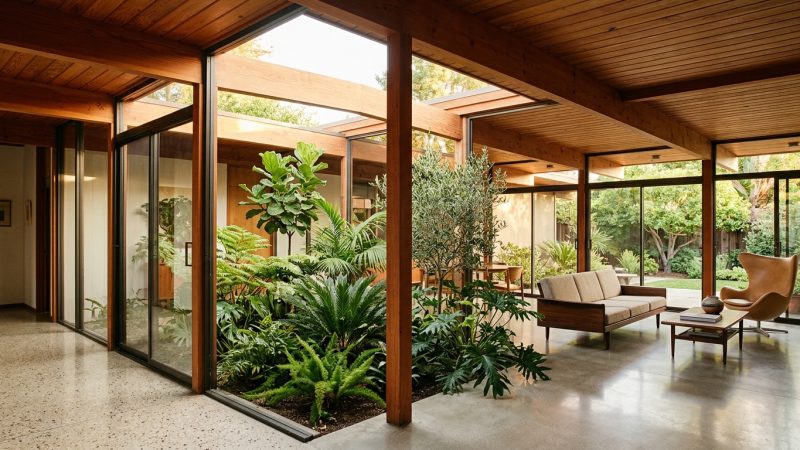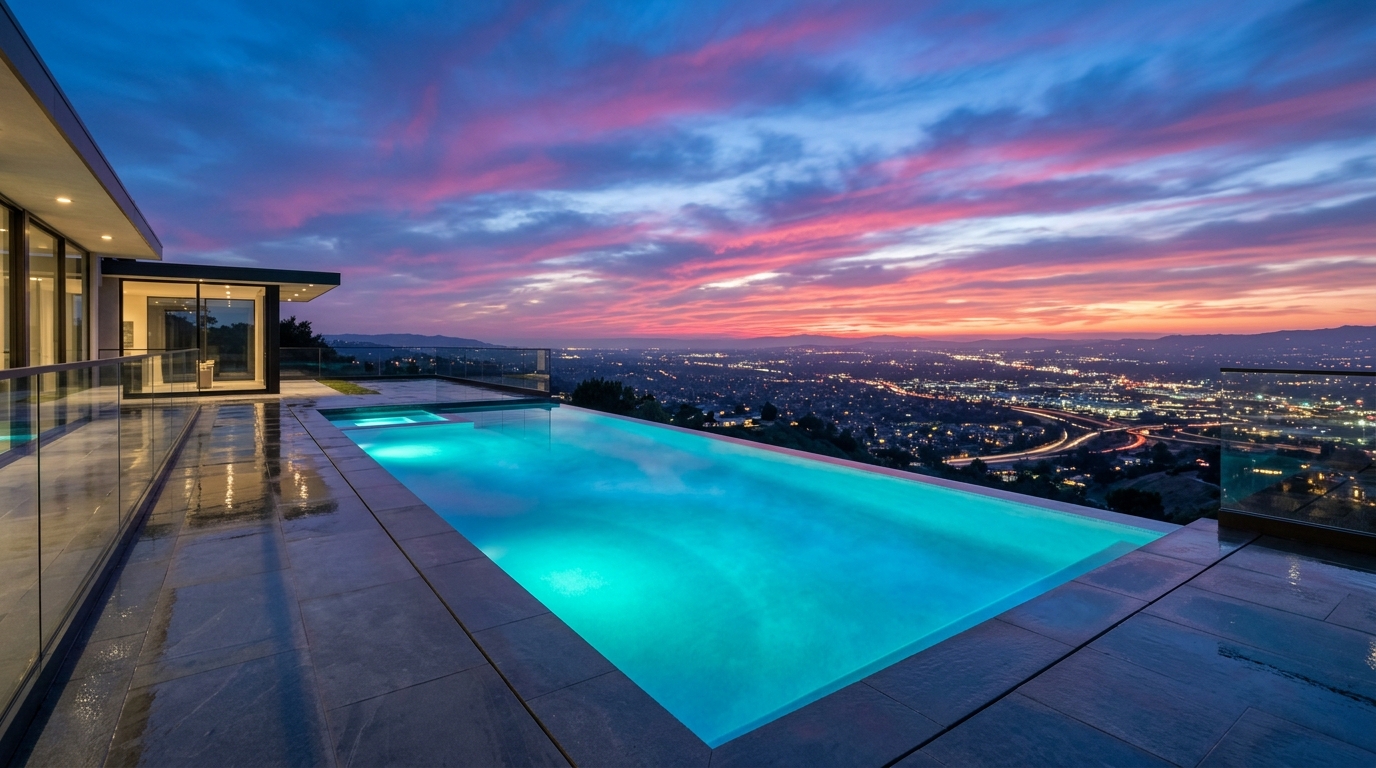
I’ve represented homes across Silicon Valley’s full luxury spectrum — including the $21 million sale of 10570 Blandor Way in Los Altos Hills. When clients ask what the luxury end of the Peninsula really looks like, Los Altos Hills is almost always the place we start.
A Town Designed to Stay Residential
Los Altos Hills was incorporated in 1956 specifically to resist subdivision. The town’s foundational ordinances include a one-acre minimum lot size, no commercial districts, no retail, and no gas stations. Town Hall sits at 26379 Fremont Road, a deliberately modest civic center serving a population of roughly 8,500 residents spread across 9 square miles.
The residential-only character isn’t incidental — it’s the single most important fact about the market. When you buy in Los Altos Hills, you’re buying into a town that has deliberately kept its rural identity.
What $5M Gets You
At the $5M level, you’re typically looking at:
- A one-to-two-acre parcel, often with oak coverage and some elevation
- A 3,500–5,500 square foot custom home, often from the 1990s or 2000s
- Mediterranean, contemporary, or traditional architecture
- Either Foothill College or Fremont Road area typically
What $10M Gets You
At $10M, you’re stepping into a different tier:
- Two-to-five-acre parcels with view corridors, landscaping pedigree, and meaningful privacy
- Architect-designed modern or traditional estates, typically 6,000–9,000 square feet
- Custom finishes, wine cellars, pool and pool houses, possible vineyard plantings
- Neighborhoods like Purissima Hills or Page Mill
What $15M+ Gets You
At $15M+, the market tilts toward a particular set of features:
- Multi-acre estates with significant Bay or valley view corridors
- Architect-designed 9,000–15,000+ square feet, often with legendary pedigrees (Swatt Miers, Feldman Architecture, Mark Becker)
- Full resort-tier amenities: pool, spa, guest house, wine cellar, home theater, motor court
- The most private canyons — often Westwind, Purissima Hills, or secluded pockets
At $21M: What That Sale Looked Like
The Blandor Way transaction I represented was a distinct category — large acreage, contemporary architecture, view corridors, and the kind of provenance that shows up when a grand custom home was built with no budget constraints. Homes in this tier rarely sit publicly on the MLS for long. Most transactions happen through private networks, relationship referrals, and Christie’s International Real Estate’s global luxury channel.
The Things That Actually Vary
Three things I coach buyers on when evaluating Los Altos Hills:
- School assignment. Most LAH parcels fall in the Los Altos School District, but some Page Mill Road parcels are in Palo Alto Unified — a significant value differentiator.
- Legal complexity. View corridor easements, private road agreements, horse covenants, lot coverage rules, and legacy trusts all come up frequently. The right agent and attorney matter.
- Commute reality. LAH streets are winding two-lane roads by design. Page Mill is a quicker commute to Sand Hill Road than Westwind is to downtown Palo Alto.
Who Buys Here
Los Altos Hills buyers tend to be tech executives, founders at scale, legacy families, and occasionally international buyers seeking a residential tier of Silicon Valley they can’t find elsewhere. The town’s deliberate residential character isn’t for everyone — but for those who specifically want it, there’s nothing else quite like it.
If you’re considering Los Altos Hills specifically, I’d welcome a conversation. My track record here includes the Blandor Way transaction and multiple eight-figure sales across the town. Let’s connect.