Silicon Valley Luxury Home Design and Architectural Trends
The landscape of high-end real estate in our region is defined by a constant tension between legacy properties and modern innovation. For buyers and sellers navigating eight-figure transactions, understanding the nuances of Silicon Valley luxury home design is not merely an aesthetic exercise; it is a critical component of asset valuation. At the Ed & Jess Team, we observe that the most sought-after architectural stock seamlessly integrates hyper-local geographic constraints with concierge-level amenities. This analysis explores the architectural features, integrated technologies, and design methodologies currently defining the upper echelon of our local market.
Table of Contents
- Evolution of Silicon Valley Luxury Home Design
- Architectural Stock Across Micro-Neighborhoods
- Curating Bespoke Materials and Finishes
- Integrating Enterprise-Grade Smart Tech
- Sustainable and Eco-Conscious Architecture
- Interior Design Trends in High-End Estates
- Navigating Zoning and Construction Realities
- Strategic Implications for Buyers and Sellers
Evolution of Silicon Valley Luxury Home Design
Over the past decade, the prevailing aesthetic in our market has shifted dramatically. The heavy Mediterranean and Tuscan revivals that dominated the early two-thousands have been largely replaced by site-specific, contemporary architecture. Buyers evaluating Silicon Valley real estate inventory now prioritize clean lines, organic materials, and an abundance of natural light.
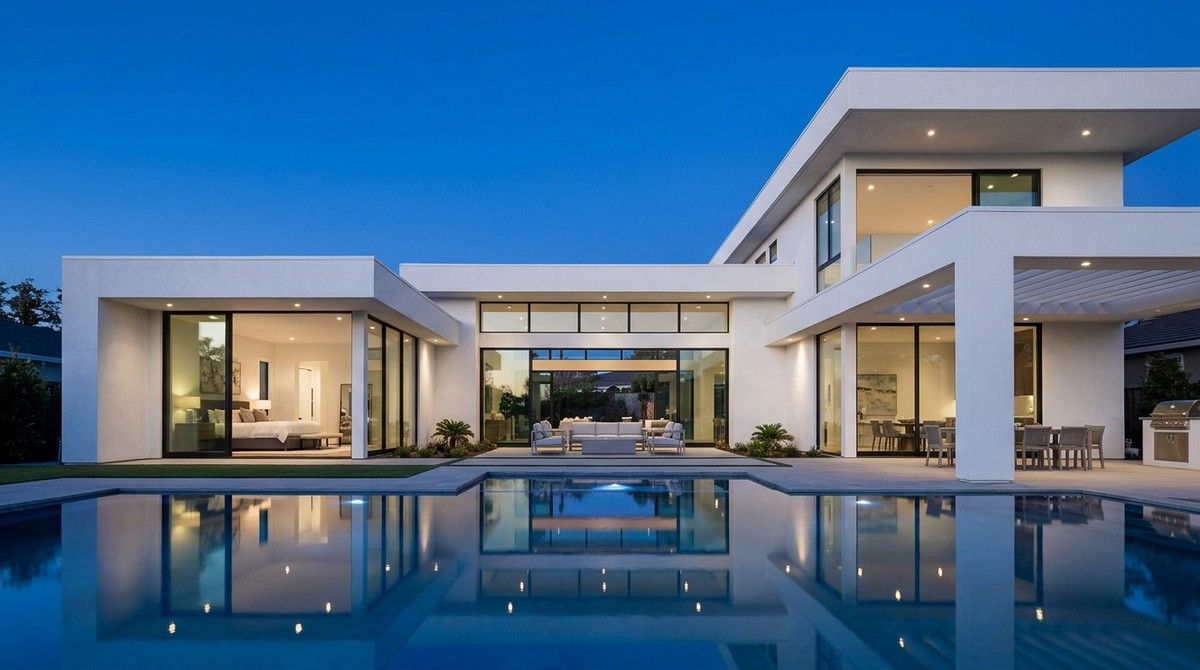
Prominent architectural firms, such as Swatt Miers, have set a new benchmark for Silicon Valley luxury home design. Their signature approach utilizes expansive walls of glass, floating rooflines, and board-formed concrete to blur the boundaries between interior and exterior spaces. This architectural style is particularly effective in our climate, allowing for year-round indoor-outdoor living. However, executing this level of design requires meticulous site planning and a deep understanding of local topography.
Architectural Stock Across Micro-Neighborhoods
Our region is not a monolith. The architectural possibilities are heavily dictated by hyper-local zoning laws, lot sizes, and historical preservation guidelines. Understanding these micro-neighborhood nuances is essential for any high-net-worth individual looking to purchase or build.
Los Altos and Los Altos Hills
In Los Altos Hills, the strict one-acre minimum lot size and stringent floor-area ratio guidelines fundamentally shape the local architectural stock. Here, Silicon Valley luxury home design often manifests as sprawling, single-story contemporary estates that follow the natural contours of the hillside. Architects must navigate complex grading ordinances and heritage tree protections, resulting in homes that feel organically integrated into the landscape. Furthermore, properties situated within the highly desirable MVLA school district boundaries command a significant premium, justifying the immense capital required for ground-up construction in this jurisdiction.
Saratoga and Actual Willow Glen
Moving toward the South Bay, the architectural narrative shifts. In actual Willow Glen (specifically the enclaves surrounding Cherry Avenue and Lincoln Avenue, distinct from everything-else-that-claims-to-be-95125), buyers place a high premium on historic preservation. The most successful examples of Silicon Valley luxury home design in this neighborhood involve meticulously restoring Spanish Colonial or Tudor facades while completely modernizing the interior footprint. Because above-ground expansion is often limited by strict neighborhood guidelines, we frequently see eight-figure transactions involving properties with extensive subterranean developments, including basement-level wine cellars, home theaters, and wellness centers.
Curating Bespoke Materials and Finishes
The material palette in today’s high-end market favors understated elegance over ostentatious display. The current standard for Silicon Valley luxury home design relies heavily on natural, tactile materials that patina gracefully over time. We are seeing a definitive move away from high-gloss finishes and polished granites. Instead, designers are specifying honed or leathered stones, such as Calacatta marble and Taj Mahal quartzite, for countertops and monolithic kitchen islands.
Flooring choices have similarly evolved. Wide-plank European oak, often custom-milled and finished on-site, provides a warm, unifying foundation for expansive open-concept spaces. Exterior cladding frequently incorporates vertical grain cedar, standing seam metal, and board-formed concrete, creating a textural contrast that grounds the architecture in its natural surroundings.
Integrating Enterprise-Grade Smart Tech
In the upper tiers of the market, smart home technology has evolved far beyond consumer-grade applications. Today, Silicon Valley luxury home design requires enterprise-grade network infrastructure as a foundational element. High-net-worth buyers, many of whom are tech executives themselves, expect their homes to operate with the same reliability and security as a corporate headquarters.
This means moving away from visible wall-mounted panels and toward invisible, omnipresent technology. Circadian lighting systems, which automatically adjust color temperature throughout the day to align with natural human biorhythms, are now a standard expectation. Audio systems are plastered seamlessly into the drywall, rendering speakers completely invisible. Biometric security systems, integrated with advanced perimeter surveillance, provide peace of mind without compromising the architectural integrity of the estate. The Ed & Jess Team concierge approach often involves connecting our clients with specialized integrators who can audit and upgrade these complex systems during the escrow period.
Sustainable and Eco-Conscious Architecture
Environmental stewardship is no longer a fringe interest; it is a core component of modern asset valuation. The latest iterations of Silicon Valley luxury home design seamlessly incorporate sustainable technologies without sacrificing aesthetic appeal. Net-zero energy capabilities are increasingly common in new construction, driven by both environmental consciousness and stringent California building codes.
We routinely see properties equipped with integrated solar roof tiles, commercial-grade battery storage systems, and geothermal heating and cooling. Graywater recycling systems and drought-tolerant, native landscaping are standard requirements for passing local design review boards. For the luxury buyer, these features represent both a commitment to sustainability and a hedge against future utility volatility.
Interior Design Trends in High-End Estates
The interior programming of luxury homes has also undergone a significant transformation. The sprawling, entirely open-concept floor plans of the past decade are giving way to more purposeful, segmented spaces. While the main living and dining areas remain connected, there is a renewed emphasis on dedicated rooms designed for specific functions.
The Rise of the Wellness Wing
A defining characteristic of modern Silicon Valley luxury home design is the inclusion of comprehensive wellness facilities. A simple home gym is no longer sufficient. Today’s luxury inventory frequently features dedicated wellness wings equipped with infrared saunas, cold plunge pools, steam showers, and acoustically isolated massage rooms. These spaces are designed with commercial-grade ventilation and specialized water filtration systems, reflecting a broader cultural shift toward prioritizing personal health and longevity.
Dual Executive Home Offices
With remote and hybrid work models firmly established among executives, the demand for dual home offices has become non-negotiable. These are not repurposed guest bedrooms; they are bespoke workspaces featuring custom millwork, independent climate control, and specialized acoustic treatments to ensure complete privacy during confidential board meetings.
Navigating Zoning and Construction Realities
For clients interested in building or undertaking a massive remodel, understanding the regulatory environment is just as important as selecting an architect. Silicon Valley luxury home design is heavily constrained by local municipalities. Design review boards in communities like Saratoga and Los Altos scrutinize every detail, from exterior cladding materials to roof pitches and landscape lighting.
Navigating these bureaucratic hurdles requires a team of seasoned professionals. Setback requirements, daylight plane regulations, and impervious surface limits dictate the maximum allowable square footage and the placement of the structure on the lot. We advise our clients to approach these projects with a clear understanding of the timeline and holding costs involved, as the permitting process alone can take upwards of eighteen months in certain jurisdictions.
Strategic Implications for Buyers and Sellers
The rapid evolution of Silicon Valley luxury home design presents both challenges and opportunities. For sellers, bringing a legacy property to market requires a strategic assessment of its current architectural standing. While a full remodel may not be feasible, targeted updates to lighting, technology infrastructure, and interior finishes can significantly impact the final valuation. Engaging in strategic marketing for high-end properties ensures that these sophisticated design elements are properly communicated to the right buyer pool.
For buyers, the current inventory requires a discerning eye. A property with a dated aesthetic but strong underlying architecture and favorable zoning may represent a superior investment compared to a newly built home on a compromised lot. By partnering with a team that possesses deep, lifelong local knowledge and commercial expertise, buyers can confidently navigate these complex decisions.
Ultimately, the most successful real estate transactions in our market are those that recognize the intrinsic value of exceptional design. Whether you are acquiring a contemporary masterpiece in Los Altos Hills or restoring a historic estate in Willow Glen, understanding these architectural trends is the first step toward securing a legacy property in one of the most competitive markets in the world.